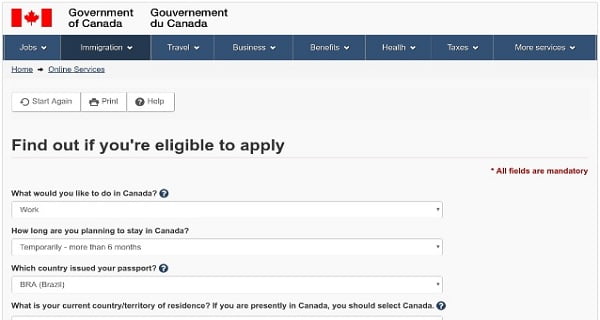
Canada remains one of the world’s most attractive destinations for skilled workers, tradespeople, healthcare professionals, and international talent. With a strong economy, high quality of life, and pathways to permanent residence, many foreign nationals explore the Canada work permit visa as a first step toward building a future in the country.
This guide explains the major Canada work visa categories, eligibility requirements, documents needed, and a step-by-step application process. The article is written for readability while incorporating important SEO terms such as Canada work permit visa, Canadian work visa requirements, open work permit Canada, and LMIA work permit.

What Is a Canada Work Permit Visa?
A Canada work permit is an official authorization that allows a foreign national to work legally in Canada for a specified employer or under specific conditions. Depending on the permit type, you may be allowed to work for a single employer or for almost any employer in Canada.
There are two main categories:
-
Employer-Specific Work Permit
You can work only for the employer listed on the permit.
-
Open Work Permit
You can work for most employers in Canada without needing a specific job offer in advance.
Major Canada Work Visa Categories
1. Employer-Specific Work Permit (LMIA-Based)
This is one of the most common work permit categories.
Key Features
-
Requires a job offer from a Canadian employer.
-
In many cases, the employer must obtain a Labour Market Impact Assessment (LMIA) showing that hiring a foreign worker will not negatively affect the Canadian labor market.
-
The permit is tied to the specific employer, position, and location.
Common sectors:
-
Construction
-
Hospitality
-
Manufacturing
-
Agriculture
-
Transportation
-
Healthcare support
2. Open Work Permit Canada
An open work permit Canada provides greater flexibility.
Who may qualify?
-
Spouses of certain skilled workers or international students
-
Recent graduates eligible under post-graduation programs
-
Some permanent residence applicants
-
Refugees and protected persons in specific situations
Benefits:
-
Work for multiple employers.
-
Change jobs without applying for a new employer-specific permit in many cases.
-
Greater mobility across provinces.
3. International Mobility Program (IMP)
Some work permits are issued without an LMIA under the International Mobility Program.
Examples include
-
Intra-company transfers
-
Free trade agreement professionals
-
Reciprocal employment programs
-
Significant benefit to Canada cases
These permits can be faster because the employer may not need to complete the LMIA process.
4. Seasonal and Agricultural Worker Programs
Canada operates programs for temporary workers in agriculture and seasonal industries. Requirements vary by program and country of residence.
Canada Work Permit Requirements
The exact requirements depend on the work permit category, but most applicants should be prepared to provide the following.
Basic Eligibility
-
Valid passport
The passport should generally be valid for the duration of the intended stay.
-
Job offer (if required)
For employer-specific permits, a written job offer is usually necessary.
-
LMIA approval (if required)
The employer may need a positive LMIA before you can apply.
-
Proof of qualifications
Educational credentials, licenses, certificates, and work experience documents may be requested.
-
Financial evidence
Applicants may need to show they can support themselves and accompanying family members.
-
Medical examination
Required for certain occupations and for applicants from some countries.
-
Police clearance certificates
May be required to demonstrate admissibility.
-
Biometrics
Most applicants must provide fingerprints and a photograph.
-
Intent to comply with permit conditions
Applicants should demonstrate that they will follow Canadian immigration rules.
For employer-specific permits
The employer often plays a major role in the process, especially when an LMIA is required. Ensure the employer is legitimate and that the job offer matches the information submitted to Canadian authorities.
Step-by-Step Canada Work Permit Application Guide
1
Determine the Correct Work Permit Type
Identify whether you need an employer-specific permit, an open work permit, or an LMIA-exempt permit under the International Mobility Program.
Questions to ask:
-
Do you already have a Canadian job offer?
-
Is your employer willing to obtain an LMIA if needed?
-
Are you eligible for an open work permit through a spouse, study program, or other pathway?
2
Gather Required Documents
Prepare all supporting documents before starting the application.
Typical documents include:
-
Passport
-
Job offer letter
-
LMIA approval (if applicable)
-
Resume/CV
-
Educational certificates
-
Employment reference letters
-
Bank statements
-
Medical exam results (if requested)
-
Police certificates (if requested)
3
Create an Online Application
Most applicants submit their work permit applications online through the official Canadian immigration portal.
You will typically need to:
-
Create an account.
-
Complete the work permit forms.
-
Upload supporting documents.
-
Pay the applicable fees.
4
Provide Biometrics
After submission, many applicants receive a biometric instruction letter. Schedule an appointment at an authorized collection center to provide fingerprints and a photograph.
5
Attend a Medical Exam if Required
A medical examination is often required for applicants who:
-
Will work in healthcare, childcare, or other designated occupations.
-
Have lived in certain countries for extended periods.
-
Plan to stay in Canada beyond specific time thresholds.
6
Wait for Processing
Processing times vary by country, permit type, and application volume. During this period, immigration officers may request additional documents or information.
7
Receive the Decision
If approved, you may receive a port of entry letter of introduction or a work permit approval document. The actual work permit is often issued when you enter Canada, depending on your situation.
Tips to Improve Your Approval Chances
-
Choose the correct visa category
Applying under the wrong category can lead to delays or refusal.
-
Submit complete documentation
Missing documents are a common cause of processing delays.
-
Ensure consistency
Information on your forms, resume, job offer, and supporting documents should match.
-
Demonstrate genuine employment intent
Explain clearly why you are qualified for the position and how you will comply with permit conditions.
-
Use official sources
Always rely on official Canadian immigration instructions for the most current requirements and forms.
Can a Canada Work Permit Lead to Permanent Residence?
Yes. Many temporary workers eventually apply for permanent residence through programs such as:
-
Express Entry
-
Provincial Nominee Programs (PNPs)
-
Canadian Experience Class
-
Various regional immigration pathways
Canadian work experience can significantly strengthen a future permanent residence application.
Final Thoughts
The Canada work permit visa offers multiple pathways for foreign nationals to work legally in Canada. Whether you pursue an LMIA work permit, an open work permit Canada, or an LMIA-exempt option under the International Mobility Program, understanding the requirements and following a structured application process can improve your chances of success.
By preparing your documents carefully, selecting the appropriate work permit category, and following the official application steps, you can move closer to your goal of working and potentially settling in Canada.
